



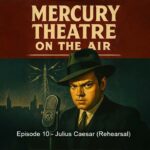
Mercury Theatre Summer Theatre
This is Mercury with its boots planted firmly on the ground. The shockwaves of 1938 are behind them, and what you hear here is confidence — storytelling that knows exactly what it’s doing. If the original Mercury Theatre was lightning, this is controlled fire.
In the summer of 1939, Orson Welles and the Mercury Theatre returned to CBS with a new dramatic series under a different banner — The Mercury Theatre Summer Theatre, sponsored by Campbell Playhouse.
Unlike the legendary 1938 Mercury Theatre on the Air, this series arrived after the infamous War of the Worlds broadcast and reflects a Mercury troupe that had already shaken the nation. The panic was over — the prestige had begun.
With Hollywood calling and Welles now a national figure, these productions were more polished, more cinematic, and more deliberate. The experimental edge of 1938 gave way to confident storytelling, lush scoring, and carefully paced adaptations designed for a mass audience — while still retaining Mercury’s signature intensity and intelligence.
The series opens with three masterworks, presented in order:
• Around the World in 80 Days
• The Count of Monte Cristo
• The Hitchhiker
Together, these broadcasts mark a transitional moment in American radio history — the bridge between Mercury’s raw innovation and Welles’ eventual move into film with Citizen Kane. This was Mercury after the storm… sharper, surer, and fully aware of its powe
B4TV playlist: Browse Mercury Theatre Summer Theatre episodes and collections


